
A practical cleaning schedule
Most inland homes: every 2–3 months is a reasonable starting point. Homes with sprinklers aimed toward the glass, heavy landscaping or nearby construction may need service more often.
Coastal homes: exposed windows can develop salt film faster, so many homeowners prefer a shorter cycle—often every 4–8 weeks depending on exposure.
Storefronts and customer-facing glass: monthly or more frequent cleaning can make sense because fingerprints, traffic film and daily use are more visible at eye level.
What makes South Florida glass get dirty?
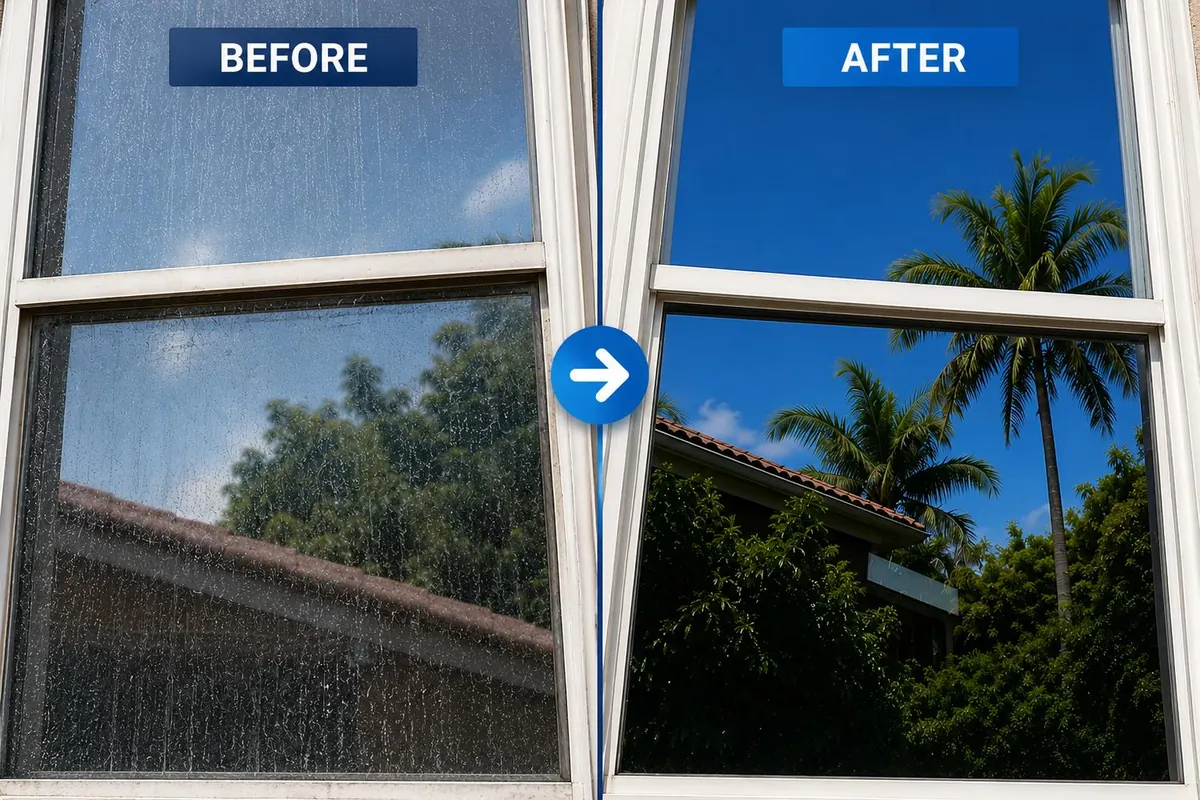
Rain alone is not the whole problem. Dust, pollen, sprinkler minerals and salt can dry onto the surface and leave haze or spotting. Sliding doors and lower tracks also collect grit from everyday use.
Signs it is time to clean
- White mineral spots from sprinklers
- Cloudy haze that is obvious in morning or afternoon sun
- Dusty screens and dark buildup in tracks
- Fingerprints on sliding doors and entry glass
- Salt film on coastal-facing windows
Maintenance cleaning vs. restoration
Routine cleaning removes normal dirt and residue. Heavier hard-water deposits can require a separate restoration process, and glass that has been permanently etched may not return to perfect clarity. Photos help us set expectations before scheduling.
The simplest rule
Do not wait until every window looks terrible. A regular schedule keeps the job easier and keeps the property looking consistently cared for.
Want a price for your home?
Text us your city, approximate window count and a few photos.
TEXT FOR A FREE QUOTE →